Security

Badly Trained Spam – Only A Quarter of Brits Train their Spam Filter

6 February 2020, London: British email users want to have as little to do with spam as possible! Only a quarter of Brits (25%) mark suspicious emails as spam or move them to the ‘Spam’ Folder, while the majority (55%) delete potential spam unread. Nearly seven percent (7%) read the email first and then delete it and four percent (4%) simply leave the spam unopened in their inbox. Fewer than 1% of users say that they reply to the spam. These are the findings of a representative survey of 2,000 people in the UK commissioned by German email service providers GMX.

Global Enterprises and Merchants Unprepared as Fraudsters Focus on Rewards Programs

LONDON, UK. 4th February 2020: Forter, the leader in e-commerce fraud prevention, today announced availability of the Forter Loyalty Program Protection solution to protect high value rewards programs from fraud and abuse, enabling merchants to offer enhanced programs with the best possible customer experience.

Things to consider before buying the perfect paper shredder

There is popularity among paper shredder because of safety of the documents and some privacy matters. If some companies are not using a paper shredder then it can spoil their business. If you do not know how to choose a paper shredder for your business or are not aware of the things which should be considered while purchasing a paper shredder, these are the point you can go through to identify and see what you may need to look for in a paper shredder.

Equifax Breach Vulnerability Surfaces as Top Network Attack

11 December 2019 – New research from WatchGuard Technologies shows that amid significant increases in both malware and network attacks, multiple Apache Struts vulnerabilities – including one used in the devastating Equifax data breach – appeared for the first time on WatchGuard’s list of most popular network attacks in Q3 2019. The Internet Security Report for Q3 2019 also highlights a major rise in zero day malware detections and, increasing use of Microsoft Office exploits and legitimate penetration testing tools.

Mainframe shops favor a single authentication system that protects both mainframe and non-mainframe applications, says new survey

Crawley, UK, December 3, 2019 - IBM mainframe customers would prefer a single unified authentication system that lets users securely access both mainframe and non-mainframe applications, a new survey suggests. As well as improving the user experience, the research indicates this would encourage more mainframe customers to move away from relying solely on passwords in favor of stronger protection such as multi-factor authentication (MFA). Mainframe professionals also recognize that it is easier and more cost effective to deploy the same MFA solution across mainframe and other environments such as Microsoft Windows.

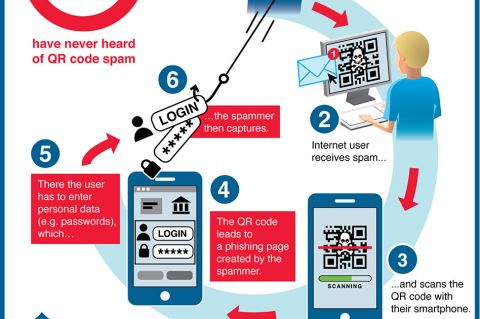
Unknown danger: 74% of Internet users unaware of QR Code Spam despite growing problem

27 November 2019, London – Seventy four per cent of British internet users have never heard of QR code spam, according to a recent representative survey commissioned by European email provider GMX. This is despite a significant increase in QR code spam being detected by GMX email security experts. They analysed how spammers change their methods by running so called ‘honey traps’, which are special email accounts without spam filters which aim to attract as much spam as possible. The analysis of the contents of these traps show that QR code spam is trending in 2019 top spam methods.

Companies Worldwide Struggling to Protect Multi-cloud Compute Infrastructures

Theale, UK – 20th November 2019 – A vast majority of enterprises worldwide have adopted multi-cloud strategies to keep pace with the need for digital transformation and IT efficiency, but they face significant challenges in managing the complexities and added requirements of these new application and data delivery infrastructures, according to a global survey conducted by the Business Performance Innovation (BPI) Network, in partnership with A10 Networks.

Research: A third of the world’s largest enterprises use inadequate data sanitization to prevent data breaches at end-of-life

AUSTIN – November 19, 2019 – New research launched today by Blancco Technology Group (LON: BLTG), the industry standard in data erasure and mobile device diagnostics, outlines the current misconceptions that prompt so many decision makers to mistakenly choose inadequate data sanitization methods and put their organizations at risk. Blancco’s study, A False Sense of Security, produced in partnership with Coleman Parks, highlights how global enterprises’ overconfidence is exposing the organizations to the risk of data breach, at a time when proper data management should be at the forefront of everything they do.

5 Cost-Effective Ways to Ensure Data Security for Your Business

Cybersecurity is a big issue nowadays for companies of all sizes, simply due to the sheer number of active web users in the modern online world. The more companies are expanding into digital marketplaces to reach the online consumer base, the higher the probability of cyber-attacks and nefarious online activity becomes. This should come as no surprise, especially considering the fact that nine in ten cybersecurity leaders are concerned about the sharp and sudden rise of cybersecurity threats in the current digital climate. 

Trick or treating Android Emoji keyboard app makes millions of unauthorized purchases

London, October 31, 2019 – A popular Android keyboard app, ai.type, downloaded more than 40 million times and included in the Google Play app store, has been caught making millions of unauthorized purchases of premium digital content, researchers at mobile technology company Upstream report. The app has been delivering millions of invisible ads and fake clicks, while delivering genuine user data about real views, clicks and purchases to ad networks. ai.type carries out some of its activity hiding under other identities[1], including disguising itself to spoof popular apps such as Soundcloud. The app’s tricks have also included a spike in suspicious activity once removed from the Google Play store.