
Should Small Businesses Build or Outsource Their Data Center Infrastructure?
Deciding whether to build or outsource data infrastructure is a critical strategic choice for any small business. The right path depends on a careful evaluation of costs, long-term goals, and the distinct advantages and disadvantages of each approach. Business owners and IT teams can follow specific frameworks to make that determination.
The Case for Building a Data Center
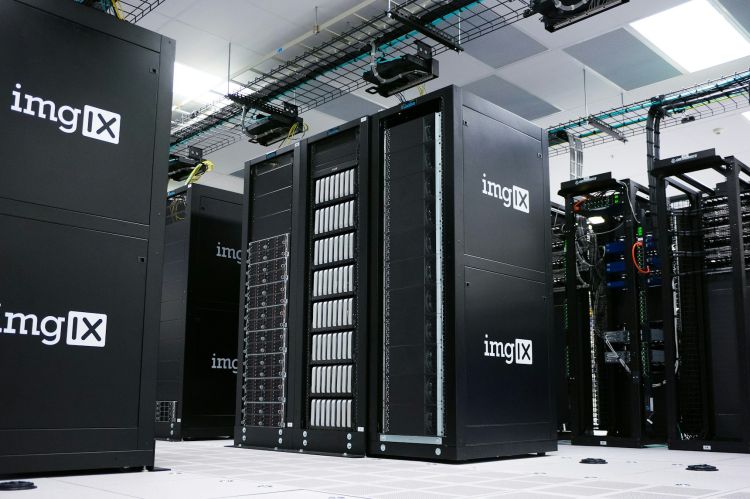
Building an on-site data center means a business commits to purchasing, housing and managing all of its own server, storage and networking hardware.
Advantages of an In-House Approach
The primary advantage of this model is the ability to gain complete control and customization. A business has the final say over every piece of hardware, software configuration and security protocol. This enables highly specific performance tuning for unique applications.
This level of control can be a powerful draw for businesses with bespoke requirements or extreme security constraints, such as defense contractors handling classified data or high-frequency trading firms requiring ultralow latency.
Challenges and Hidden Costs
However, control comes with multifaceted responsibilities and costs. The up-front expenditure is substantial and encompasses more than just servers. It also includes infrastructure for networking, power redundancy and climate control. This is followed by a stream of ongoing operational expenses, including electricity bills, hardware maintenance contracts and software renewals.
An on-premises center requires 24/7 monitoring by a team with specialized skills in areas like network engineering, data security and server administration. The professional roles needed to cover these disciplines are usually expensive and difficult to fill. For example, the median pay for a network and computer systems administrator was $99,130 per year in 2025.
The Case for Outsourcing Data Infrastructure
Outsourcing allows a business to leverage external expertise and infrastructure instead of building its own. This approach generally follows two models:
- Colocation: A business buys its own server hardware but rents space in a specialized data center. This market is expanding at a compound annual growth rate of 14.9% and is projected to reach $124.15 billion by 2028.
- Cloud computing: In this model, a business outsources everything. It rents virtual computing resources on demand from a cloud provider like Azure or Google Cloud without owning any hardware.
Businesses that require direct management of specific physical servers or want to use existing hardware might choose colocation. Those seeking maximum flexibility and no hardware responsibilities will generally opt for the cloud.
Key Benefits
This approach converts capital expenditures into a predictable operating expense and frees up capital for core business functions. Rapid scalability is an advantage, allowing a business to increase or decrease resources in minutes.
It grants access to enterprise-grade security and reliability and offers built-in disaster recovery options. A small business can also tap in to services like artificial intelligence (AI) and machine learning platforms that would be costly to develop in-house.
Outsourcing also provides a path to achieving sustainability targets. Many modern cloud data centers use advanced cooling and power management and often invest in renewable energy. By outsourcing, a small business can leverage green technology and reduce its carbon footprint without incurring the high cost of building such infrastructure itself.
Potential Drawbacks to Consider
The key drawbacks of outsourcing revolve around a loss of direct control and potential long-term costs. A business becomes dependent on the provider’s infrastructure, security model and feature roadmap.
There is also the risk of “vendor lock-in,” where migrating data and applications to another provider can be complex and costly. While the pay-as-you-go model is flexible, it requires careful monitoring and governance. Without proper oversight, cloud spending can easily spiral.
Decision Criteria for Small Businesses
To determine the best path forward, businesses should answer these questions:
- Total cost of ownership (TCO): Can the business afford the significant up-front capital investment and ongoing operational costs of building? Does the pay-as-you-go model of the cloud offer better financial predictability and control?
- Scalability and growth: Does the business need the ability to scale resources up or down to meet fluctuating demand, or are its needs stable and predictable enough to justify buying fixed capacity? On-premises provisioning requires peak-demand planning, which can be wasteful.
- In-house expertise: Does the current team possess the specialized skills required for 24/7 data center management? An honest assessment of internal capabilities is crucial, as hiring for these roles can be challenging and expensive.
- Security and compliance: Does the business operate in a regulated industry? Cloud providers often offer precertified compliance with standards such as HIPAA and PCI DSS, which can be an advantage over achieving and maintaining these certifications independently.
- Agility and speed: How important is speed to the business’s strategy? The ability to provision a new server in minutes versus weeks or months can accelerate innovation and reduce the time to market for products and services.
- Migration complexity: How difficult will it be to migrate current applications and data to a new environment? Are the existing systems modern and cloud-ready, or are they older ones that could make migration complex and expensive?
- Reliability and disaster recovery (DR): What level of uptime does the business require, and what is the plan for recovering from a major event? A business must compare the high cost of building its own redundant power, cooling and secondary DR sites against leveraging the built-in options offered by major cloud providers.
Building a data center is typically viable for companies with specific, highly sensitive workloads and the financial resources to support a dedicated IT infrastructure team. For most other small businesses, outsourcing provides a more agile, secure and cost-effective foundation. This allows owners and their teams to focus on growth rather than on managing hardware.
Making the Final Call
Building an on-site data center offers granular control but requires a significant up-front investment and deep operational resources. In contrast, outsourcing offers flexibility and scalability in exchange for ceding direct control over the physical infrastructure.
Before committing to a path, IT professionals and business owners should conduct a thorough audit of their current budget, projected growth and internal capabilities. Only by weighing these needs against each approach’s differences can a business choose the right long-term strategy.