Technology

What is Internet of Things (IoT) and its Impact on Industries?

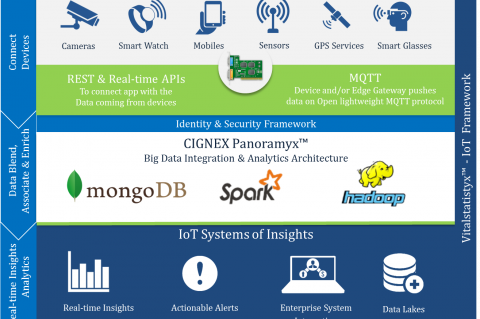
A British entrepreneur, Kevin Ashton coined this term “Internet of Things” in 1999. Also called “Internet of Everything”, it is the way of interaction amongst network of physical objects or things included within software, sensors, electronics, and connectivity. It enables objects to transfer data inside a network, to connect with humans, with computers or with other objects.

How Apple is Using Big Data

Apple is often on the cutting edge of technological advances, so it probably shouldn't be a surprise that the company uses big data extensively. Having said that, it’s important to note that it wasn’t always this way. Other businesses like Google were heavily involved in big data years before Apple took the leap, but Apple has worked tirelessly to catch up to the competition. Now, the company has become enmeshed in big data analytics, with the technology driving many of their most important decisions. It’s true that Apple remains highly secretive about how they use big data in many cases, but that hasn’t prevented some interesting insights from being divulged.

The Promising Future of the Internet of Things in India

The Internet of Things (IoT) is lauded by most as the next great revolution in technology. A world where every object we use has a sensor, enabling it to connect to the internet so it can communicate with each other and the user is a world that seems like something out of science-fiction. With the Internet of Things fast approaching, that world could become a reality very soon. Experts estimate that the IoT market could be worth as much as $1.7 trillion by 2020, with more than 50 billion devices connecting to the IoT by that time. But where will much of that growth come from? The U.S.

Starting my Summer with the Blossom Smart Watering Controller

Spring brought to South Dakota plenty of rain. The lawns are green, the flowers are in full bloom, and it seems we can't go beyond a couple days without a rain shower or thunderstorm. While water is usually plenty for my city, we do things smart around here and restrict water usage for our lawns year round. It's not uncommon in my part of the country to see the weather pattern quickly change from wet to dry. What once was green can turn brown in a hurry.

Counting The Cost Of BYOD

There are many pro’s and con’s when actioning a Bring Your Own Device to work policy and these effect both employee and employer. When counting the cost of BYOD it is important to recognize both financial and psychological factors:

Productivity vs Stress

When BYOD systems are put in place it has been clearly demonstrated that productivity is increased. According to Cisco, the simple implementation of using a smartphone or tablet that is familiar to the employee leads to better productivity, saving on average 81 minutes of time performing tasks each week.

Dealing with BYOD After the Holidays

The workplace can be hectic during the month of January, especially given the fact that employees arrive back at work with their fancy new devices. New laptops, mobile devices, and smartphones are among common gifts given and received over the holidays. For companies that use a “Bring Your Own Device” system, this surge in technology changes can present some difficult challenges.

A Skeptical Forecast for Wearable Tech

At the beginning of 2014, a lot of people predicted it would be the year wearable technology really broke through. The promises of Google Glass and rumors of Apple Watch exited us, and we could already see the success of things like fitness bands. However, as the year is coming to a close, we now realize we were a little presumptuous. In fact, we can’t even be sure 2015 will be the year for wearables. There’s a lot of promises and hype surrounding wearable devices, but a closer look at their current popularity leaves their future up for debate.

How Apple Pay Differs From Other Mobile Payment Services

You better get used to paying with your phone. It’s already a popular method of making purchases in places like Japan and even some countries in Africa, but in the United States it hasn’t caught on quite as quickly. While so-called tap-to-pay methods have been around for a number of years already, Apple’s recent announcement of their own mobile payment service, called Apple Pay, has sent a new wave of excitement through the technology community.

How Wearable Tech Can Turn the Internet of Things Into the Internet of You

You’ve probably heard of the Internet of Things (IoT) and how it’s set to completely transform the world. Some may view thguestis as an exaggerated take, but there’s little question that companies across the globe are taking an intense interest in it. The central concept of the IoT features tiny sensors and other machines that are all connected to the internet, allowing them to communicate with people as well as each other. Some experts are predicting that by the year 2020, there could be as many as 20 to 30 million items that are part of the Internet of Things.