Technology

Spectral Edge launches Nighteq to help consumers sleep better after watching TV

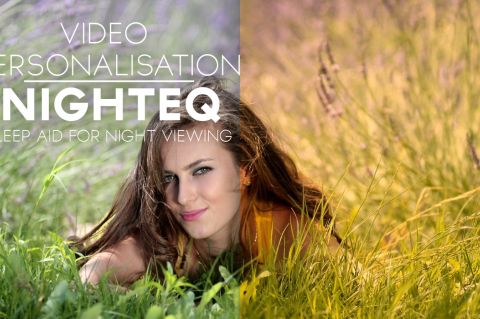
Demonstrates innovative video personalisation technology on IPTV set top box at OTTtv World Summit

London, UK, 7 November 2016: Multiple studies have shown that blue light can reduce melatonin production, resetting body clocks and making it difficult to sleep after watching TV or using tablets/laptops. To combat this issue, Spectral Edge (www.spectraledge.co.uk) today announced Nighteq, its new image enhancement technology that helps viewers get a good night’s sleep by reducing the amount of blue light coming from TVs, tablets and computer screens, whilst maintaining contrast and picture quality. 

Will The Internet Of Things Enable Your Kettle To Steal Your Car?

Barry Mattacott, marketing director at security specialist Wick Hill Group, looks at the security risks of linking more and more smart devices to our networks. Are we just creating ever more vulnerable endpoints in today’s world of the Internet of Things?

Back in the good old days, we nailed the front door up tight with a firewall and we knew, that with good security on our gateway, our network was safe from the nasties of the outside world. But those pesky kids in their bedrooms, not to mention state sponsored cybercriminals, worked out that they could circumnavigate our state-of- the-art firewall by looking for a way in at the opposite end of our network - the endpoint.

5 Breakthrough Technologies Heading into 2016

Every day there are technological breakthroughs that occur behind the closed doors of research labs (and house garages where some startups begin), and then there are the breakthroughs that “go mainstream” with consumers. 2015 saw so many that it is difficult to condense the list to five. The following impressive technologies made the cut because they improve convenience, productivity, and efficiency (in addition to having that barely definable “wow” factor).

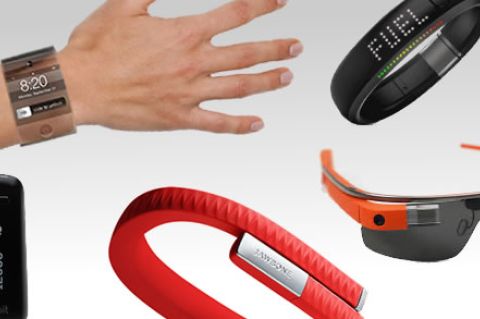
1. Wearable Smart Devices

Preservica warns companies to safeguard against future 'X-Files'

With many file formats and software popular in 1993 now obsolete and unreadable, company compliance and information governance teams are warned against losing critical digital information forever

As 90s hit television series The X-Files returns to our screens next month after a 13 year hiatus, digital preservation specialist Preservica has launched an awareness campaign to highlight the danger of file format and software obsolescence, and an impending ‘Digital Dark Age’ – warned against by Google’s Vint Cerf last year.

Kentico Survey Says: Interest in Smartwatches is on the Rise

Over two and half years ago, I wrote that wearables would be the next "disruptive innovation" but acknowledged we're not there yet. Once the right company with the right design comes along, this new market will take off just as fast as when Apple introduced their first iPad. Despite Apple introducing their smartwatch, I still sit on the sidelines waiting for the right wearable to convince me the time to buy one is now.

Tech for the Hungry: Why Technology is Key for Feeding the World

What a great irony it is that we live in a world where there is more than enough food to feed all seven billion people, yet statistics show that 870 million people go hungry every year. One person out of every nine lacks the daily nutritional requirements to “be healthy and lead an active life.” At this point, ending world hunger depends not on getting more food, but on improving technologies that identify where it is needed most, and get it distributed there quickly and efficiently.

NWL deploys 500 Panasonic Toughpad tablets for field workforce

Used to receive work schedules, locate sites through GIS applications, carry out risk assessments and report activity

Northumbrian Water has rolled out 500 Panasonic Toughpad FZ-G1 tablets to its field workers. The rugged devices are the single mobile tool used by NWL’s field force to provide real-time access to all its major systems. They are used to receive work schedules, locate sites through GIS applications, carryout risk assessments and report activity. Photos of sites or incidents can be taken using the tablet's camera and attached and sent directly to the system. Users can also access their office email and the internet, ensuring they have access to all the important systems when out working.

Taking Wearables to the Next Level

Wearable technology has become more advanced than ever in recent years; first came the emergence of smartwatches, then digital eyeglasses, and now even clothing which can monitor your health and stream data to your phone. One has to wonder where wearables are headed, with so many users seeking out the newest and the best, and companies striving to meet this demand. The answer is: only up.

What Companies Are Doing to Make Theirs Stand Out