Enterprise

Watching the Watchers: Using Big Data to Track the Government

In today’s digital world, many people have become more worried about the possibility of having government agencies track them. Considering the controversy surrounding the leak of NSA programs that target U.S. citizens, these worries are not without reason. With the explosion of big data technologies, it has become easier than ever for governments to keep track of what their citizens are doing. It’s all in the effort of protection, at least in most circumstances, but it does have the feeling of violating personal privacy.

Enterprise Resource Planning in the Cloud

LONDON — December 2015. A survey commissioned by Hitachi Solutions Europe has recently revealed that 31 percent of organizations have moved all or part of their Enterprise Resource Planning (ERP) systems to the Cloud, or are in the process of doing so. The survey questioned 315 senior finance professionals with the aim of understanding their position and perceptions around ERP in the Cloud.

At this time 69 percent of respondents have not moved their ERP systems to the Cloud, but 44 percent said they would consider moving to the Cloud in the future. Of that 44 percent, two thirds (67 percent) said they would contemplate moving in the next two years.

Top 10 IT Workspace Trends in 2016

Corporate IT will need to manage a wide range of issues affecting the IT strategy agenda

Matrix42, a top provider of software for workspace management, today revealed that Unified Endpoint Management tops the list of IT trends that companies will see in 2016. Other areas of IT that will have a major impact include mainstream adoption of wearables and smartwatches, Internet of Things, Social ITSM and workspace aggregation.

Oliver Bendig, CTO of Matrix42 has analyzed the trends affecting the modern IT workspace and identified 10 key areas that companies will need to manage in 2016.

1. Adaptive workspace access

Leveraging Open Source for Digital Transformation of Enterprise

Organizations have to constantly change and tailor their business strategy to meet the changing needs of internal and external customers. However, in recent years, they have not been prepared to take advantage of the digital paradigm that has enveloped and embraced every aspect of the customer lifecycle. The explosive growth of e-commerce, mobile and social media has completely altered the customer’s lifestyle and buying habits.

Digital preservation goes mainstream

Preservica reports surge in demand for digital preservation software

Digital Preservation specialist, Preservica, has seen a 50% growth in new customer signings in the last six months, as organizations increase their focus on protecting and future-proofing critical, long-term information assets.

The acceleration in new signings could see the company doubling its customer base year-on-year in the first half of 2016.

Preservica’s world-leading digital preservation software is now in use at a mix of both public sector and commercial organizations including:

What Big Data Needs to be Coupled With to Actually be Useful

Big data has become tremendously popular with businesses these days. It’s the latest buzz term that everyone seems to be using to indicate their willingness to use new technology to improve their companies. That doesn’t make it bad; it just means that it’s a clear trend many are eager to become a part of. In fact, its transformative effect is very real despite the tendency of businesses to refer to it as if it were a shiny new toy. As revolutionary as big data analytics has been in just the past few years, some organizations may be misunderstanding how to truly get the most out of it.

The Open Source Benefits for Businesses

The open source technology originated at the “bottom of the stack” with the Linux operating system, which has become one of the most popular operating systems now. In late 1990’s the term open source was coined and the evolution of Apache, Mozilla, Perl took place, while birth of “Commercial Open Source” was seen in early 2000. The adoption started moving up the technology stack in 2005 and post 2008, Open Source adoption by enterprises was seen widely and in 2012 open source became an integral part of every enterprise IT strategy.

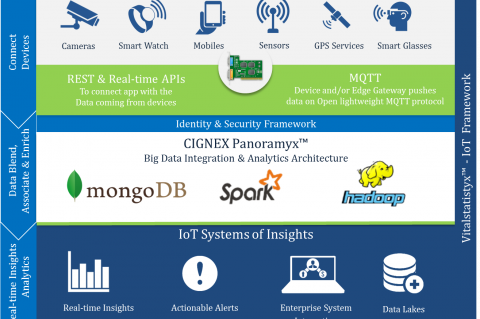
What is Internet of Things (IoT) and its Impact on Industries?

A British entrepreneur, Kevin Ashton coined this term “Internet of Things” in 1999. Also called “Internet of Everything”, it is the way of interaction amongst network of physical objects or things included within software, sensors, electronics, and connectivity. It enables objects to transfer data inside a network, to connect with humans, with computers or with other objects.

SoftLanding launches enterprise content management solution for IBM i users

Provides a fast, cost-effective way to transform content from IBM i applications for web, mobile and email

PETERBOROUGH, NH – September 7, 2015 - SoftLanding® Systems, the IBM i software division of UNICOM® Global, today announced the launch of an enterprise content management solution that quickly transforms existing system output from IBM i business applications to work with digital channels such as the web, mobile and email.

The Columbus software, developed by Macro 4, the specialist document management division of UNICOM Global, is now available for the IBM i platform as part of the SoftLanding solution portfolio.