
How AI Recruitment Software Improves Tech Hiring Accuracy
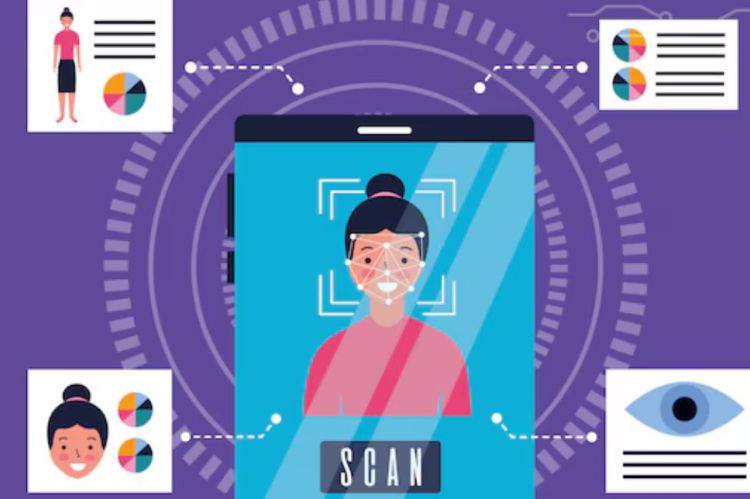
It has never been easy to hire technical talent, yet today you are under more pressure than ever before to quickly add headcount without compromising on quality. With stiff competition for engineers, developers and tech specialists, you have to re-think how you screen, assess, and shortlist candidates. Due to fast-growing and large scale of hiring requirements, conventional hiring approaches generally fails to cope up with technical complexities.
By relying solely on manual screening and unstructured interviews, there is a greater likelihood of mis-hires. This is exactly the reason why most of the organizations are now using AI recruitment software for tech hiring to curtail mistakes and make stronger decisions. With a smart, AI recruitment platform, you can make hiring decisions based on actual skills, quantifiable competencies, and predictive markers of performance.
In this blog, you will learn how AI in tech recruitment changes the landscape of the hiring lifecycle, thus enabling you to achieve improvements in tech hiring accuracy in a continuous manner.
Increasing Complexity of Tech Hiring
You need to know why the tech hiring process fails in the first place before improving accuracy. Instead, organizations miss the critical tech hiring challenges that need to be identified in the beginning, such as, vague job descriptions, inconsistent evaluation criteria, or hidden interviewer bias during interviews.
If a developer content is posted, you can receive hundreds of resumes but only 1–2% will match your technical stack. Without a structured way to filter them, you end up wasting a lot of time sifting through unrelated profiles. There are even more worse outcomes where good matches can be thrown away as their resume does not match the keyword expectations.
The tech hiring process is also based on skills rather than degrees. You need to assess for coding skills, system design mindset, ability to solve problems and to collaborate. These variables are difficult to analyze consistently with manual processes.
This is why you need structured, data-led automation.
Intelligent Resume Screening with AI
Subjective judgment is often used for manual resume screening. Sometimes two recruiters will look at the same profile and find different candidates. Instead, using AI hiring software for developers removes this proverbial kind of flaw from the equation with standardized algorithms to assess factors such as skills, experience and relevance.
Modern systems take context, technical depth, and project relevance into account rather than just keywords. So for instance if a candidate has experience in scalable microservices architecture using Kubernetes and Docker, the system will score not just whether a candidate has mentioned Kubernetes and Docker as keywords, but how complicated the experience is.
AI tech recruitment parses resumes intelligently, and puts candidate experience in context to ensure that the reasons for shortlisting decisions are guided by data instead of assumptions.
You decrease the chance for human error, and you improve the quality of the shortlist.
Precision in Skill Matching
Hiring for really specific technical requirements poses one of the biggest challenges in tech hiring. Be it a backend engineer proficient in GoLang or a machine learning specialist proficient in TensorFlow, accuracy counts.
Tech hiring automation tools also understand skill groups, coding paradigms, tool awareness and exposure to domains. It goes beyond simple filtering and uses semantic matching to map candidate profiles against job competencies.
This means you are not just matching “Java developer” to “Java job.” You are matching project complexity, system scale, code quality exposure, and relevant industry experience.
AI-Driven Candidate Sourcing
Screening potential candidates may be easy but judging whether they fit the bill could be far more challenging. Since top developers are generally in employ somewhere else, passive candidates are either employed elsewhere or rarely apply directly.
AI candidate sourcing systems scan databases, professional networks, coding platforms, internal talent pools, and more to find the profiles that best match okay. Contribution history, technical endorsements, and relevance to project
Rather than trawling through numerous platforms, you will receive a ranked shortlist of candidate recommendations based on job prediction.
Data-Backed Interview Structuring
Unstructured interviews reduce hiring reliability. It’s hard to compare performance when each candidate has been given a different set of questions.
Tech hiring solutions of the future use AI recruitment software that come armed with structured interview frameworks. It suggests competency focused questions corresponding to the job technical requirements.
Such a measured process ensures that the evaluation is uniform across candidates and helps in making improved decisions.
Predictive Hiring Analytics
One of the striking benefits of AI-powered tech recruitment Rather than focusing on experiences in the past, AI models observe patterns with earlier hires that did make the cut.
It assesses the combination of skills, type of project, tenure patterns, and performance metrics. From there, it predicts the likelihood of which candidates will perform better in the same roles. With this predictive capability you can transition from resume screening to performance forecasting.
Enabled Quicker Decision Making Without Sacrificing Quality
Hiring is often a battle between speed and accuracy. A rushed decision and quality drops through the floor. Hiring, but take too long to evaluate people, and you lose out on the best talent.
Tech hiring automation tools resolve this conflict by accelerating administrative tasks while maintaining analytical depth. Resume parsing, skill ranking, interview scheduling, and communication workflows are automated.
Continuous Learning and Optimization
AI systems are not static; unlike static hiring processes. Each hiring decision cycles data back through the system.
Your AI recruitment platform gets to know which profiles work well, which interviews correlate with success and which sourcing channels produce great candidates, over time.
With every hiring cycle, you can use this continuous learning loop to fine-tune criteria and use them to make tech hiring ever-more accurate.
Similar to how your engineering team is iteratively improved with experience, your recruitment system becomes more potent with repetition.
Stronger Collaboration Between HR and Tech Teams
Hiring delays often come about due to a misalignment between recruiters and technical interviewers. Mechanical Engineers will have not enough structured way to evaluation, but at same time, Recruiters will not understand technical nuances properly.
AI Hiring Software For Developers enables you to establish a common evaluation framework The system clearly defines skills, provides scoring rubrics, and establishes job expectations.
This helps HR and engineering teams to have the same structured data to work with. Collaboration enhances, and the accuracy of hiring rises.
Solving Tech Hiring Issues at the Root
Hiring failures are most often related to the design of the process. Especially some of the tech hiring issues to spot in start are the essential beginning points to bring down the panic.
Here’s a glance at the common mistakes that gets improved with the fixes:
Degree Dependence not Skill Dependence
Inconsistent technical screening
Delayed feedback loops
Manual resume filtering errors
AI recruitment software for tech hiring breaks these problems down in order. It brings out standardization, boosts transparency, and minimizes randomization in decision-making.
When you turn your process into one which is driven by data, recruiting accuracy improves by default.
Final Thoughts
The ideal developer can have positive ramifications for product performance, team cohesion, and business expansion. This single wrong hire can cause release delays, extra costs and work on the people morale.
AI recruitment software for tech hiring helps you build a structured, scalable, and intelligent hiring ecosystem from scratch. Every stage of the process becomes more precise, AI candidate sourcing, predictive analytics, structured interviews, etc.
When you integrate an advanced AI recruitment platform into your workflow, you move from reactive hiring to strategic talent acquisition.
If you must have the same results every time, better teams, and lesser risk of hiring the wrong talent, it is imperative that you use tech hiring automation tools and new age AI hiring software for developers.
In today’s competitive environment, the ability to improve tech hiring accuracy is not optional. It is a strategic necessity.